Peptide Logistics Management: A Methodological Framework for Protocol Integrity

The most sophisticated protocol is fundamentally useless if the molecular integrity of the compound is compromised during transit. While many focus solely on the selection of specific sequences, the reality is that physiological efficacy depends entirely on rigorous peptide logistics management. It's a high-stakes environment where a single temperature excursion or a minor delay in the cold chain can render a strategic recovery plan ineffective. You likely recognize that the complexity of coordinating multiple touchpoints creates a significant margin for error; this uncertainty often leads to a justified fear that the product's stability has been undermined by poor handling.
This article establishes a disciplined framework designed to eliminate these variables and maintain protocol integrity through every phase of the supply chain. You'll gain a technical understanding of the logistical requirements necessary to ensure transparency and stability. By implementing professional oversight and a data-driven approach to handling, you can minimize the risk of failure caused by external factors. We'll outline the specific methodologies required to manage these sensitive assets with the precision that elite performance demands.
Table of Contents
Defining Peptide Logistics Management in Professional Wellness
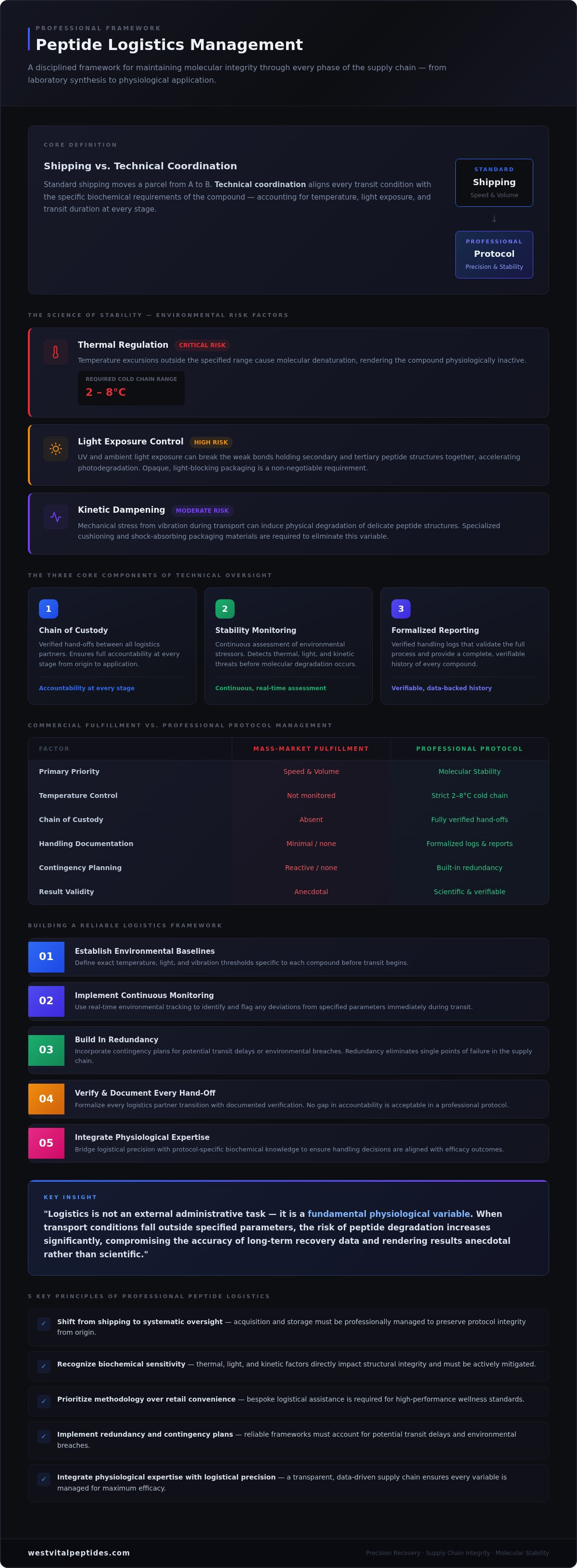
Peptide logistics management represents the systematic oversight of acquisition, storage, and transport within a professional wellness framework. It's a departure from standard e-commerce fulfillment, which often prioritizes speed and volume over the preservation of molecular stability. In high-performance environments, the distinction between simple shipping and technical protocol coordination is critical. Shipping is merely the movement of a parcel from one location to another. Technical coordination, however, involves the alignment of transit conditions with the specific biochemical requirements of the compound. This data-driven approach to logistical touchpoints ensures that every variable, from ambient temperature to transit duration, is accounted for. Transparency serves as the foundation of this process. Without a clear view into the handling history of a compound, the practitioner cannot verify its physiological efficacy. Trust isn't a byproduct of marketing; it's a result of rigorous methodological transparency throughout the recovery supply chain.
The Core Components of Technical Oversight
Technical oversight requires a meticulous chain of custody that tracks the journey of a peptide from its point of origin to its final professional application. This isn't a passive observation but an active monitoring of stability. Environmental variables, particularly temperature fluctuations and light exposure, dictate the success or failure of the logistical chain. Documentation and reporting aren't administrative burdens; they're essential tools for maintaining protocol integrity. A professional framework utilizes these reports to verify that no breaches occurred during transit. Essential components include:
Chain of custody: Verified hand-offs between logistics partners to ensure accountability at every stage.
Stability monitoring: Continuous assessment of environmental stressors that could induce molecular degradation.
Reporting: Formalized logs that validate the handling process and provide a verifiable history of the compound.
Why Logistics is a Physiological Variable
Logistics is often incorrectly viewed as an external administrative task, yet it remains a fundamental physiological variable. When transport conditions fall outside of specified parameters, the risk of peptide degradation increases significantly. This degradation doesn't just waste resources; it compromises the accuracy of long-term recovery data. If the compound's integrity is unknown, any physiological results become anecdotal rather than scientific. Precise management of these variables ensures that the biological intended outcome matches the actual application. Peptide logistics management is the discipline of precision recovery that bridges the gap between laboratory synthesis and physiological application through rigorous environmental control.
The Science of Stability: Environmental Risks and Handling
Peptides are inherently fragile sequences of amino acids. Their secondary and tertiary structures are held together by relatively weak bonds that are highly susceptible to environmental stressors. Effective peptide logistics management is not merely about cold storage; it is about the comprehensive mitigation of all variables that threaten molecular integrity. Standard commercial transport often ignores these nuances, treating sensitive compounds with the same indifference as durable consumer goods. This lack of precision can lead to significant degradation before the protocol even begins. Professional oversight ensures that the biochemical properties of the compound are preserved through every mile of transit.
The distinction between specialized logistics and standard shipping becomes clear when evaluating the risk profile of high-stakes wellness assets. While a typical courier focuses on delivery speed, a disciplined logistical framework prioritizes the following environmental controls:
Thermal Regulation: Maintaining a strict cold chain of 2-8°C to prevent molecular denaturation.
Kinetic Dampening: Reducing mechanical stress from vibration that can lead to peptide aggregation.
Photolytic Protection: Eliminating UV exposure that triggers photochemical degradation.
Temporal Efficiency: Minimizing the total time in transit to reduce the cumulative risk of environmental exposure.
Thermal Degradation and Recovery Efficacy
Heat exposure acts as a catalyst for chemical reactions that alter molecular structure. When a peptide is subjected to temperatures outside the required range, it may undergo denaturation or aggregation. This process reduces potency and can introduce impurities that interfere with physiological outcomes. Consistency is the primary objective. The 'Freeze-Thaw' cycle is particularly damaging, as repeated phase changes can shear delicate bonds. Logistical strategies must account for regional heat maps during national transit, utilizing phase-change materials that maintain a steady environment regardless of external conditions. Managing these thermal variables is essential for anyone who values data-driven recovery over anecdotal results.
Kinetic and Light Sensitivity in Logistics
Vibration and ultraviolet (UV) exposure are often overlooked risks in standard shipping models. Excessive kinetic energy during transit can lead to mechanical stress on peptide bonds, potentially causing aggregation or precipitation within the solution. Similarly, UV radiation can induce photochemical reactions that degrade the compound's purity and safety profile. Professional handling protocols require opaque primary packaging and specialized dampening materials to neutralize these forces. Protecting these assets requires a disciplined approach that views the transit container as a controlled extension of the laboratory environment. Maintaining this level of control requires professional oversight from a partner who understands the relationship between transport conditions and biological efficacy. If you are coordinating a high-stakes protocol, seeking specialized logistical assistance can provide the transparency needed to ensure your peptide logistics management remains beyond reproach.
Commercial Fulfillment vs. Professional Protocol Management
The proliferation of mass-market fulfillment centers has introduced a retail-centric mentality to a field that requires clinical precision. Standard commercial fulfillment models are engineered for shipping volume and inventory turnover, often at the expense of the specific environmental sensitivities discussed in previous sections. In a high-performance wellness context, this retail thinking introduces unacceptable risk. While a consumer-facing business might prioritize the convenience of an automated checkout, professional peptide logistics management demands a methodology that prioritizes protocol integrity above all else. Choosing a partner based on their ability to move parcels quickly is a tactical error; instead, the selection must be based on their commitment to technical transparency and methodological accuracy. Professional advisory services prioritize the preservation of molecular integrity because they understand that the science is only as good as the handling protocol.
Identifying the Limits of Standard 3PL Models
Standard Third-Party Logistics (3PL) providers frequently operate on a scale that precludes the nuance required for sensitive recovery protocols. The inherent conflict between same-day speed and technical accuracy often results in handling errors that are invisible to the end user until the protocol fails to produce expected physiological results. Automated warehouses are designed for efficiency, utilizing robotic systems that lack the capability to monitor the subtle environmental shifts that compromise peptide stability. Human oversight isn't a luxury in complex recovery logistics; it's a necessity. A professional framework ensures that every touchpoint is managed by individuals who understand the biochemical stakes of the materials they're handling. This level of scrutiny is rarely found in warehouses that prioritize throughput over protocol fidelity.
The Advisory Advantage in Logistics
Specialized consulting bridges the gap between the laboratory and the individual by integrating logistical strategy directly into the design of the protocol. This advisory approach ensures that logistics aren't an afterthought but a foundational component of the recovery plan. Strategic planning involves designing the transit and storage parameters around the specific requirements of the peptide sequence, rather than forcing the protocol to fit within the constraints of a standard shipping window. Engaging in professional peptide wellness consulting allows for a level of logistical mastery that retail models cannot replicate. This disciplined oversight transforms peptide logistics management from a simple delivery service into a critical safeguard for your physiological data and long-term recovery goals. By aligning delivery mechanics with scientific foundations, the practitioner ensures that every variable is accounted for before the application begins.
Building a Reliable Logistics Management Framework
Establishing a robust framework for peptide logistics management requires a transition from passive observation to active, technical oversight. Precision requires a plan. This process begins with the recognition that every link in the supply chain is a potential point of failure. A disciplined approach identifies these vulnerabilities before they manifest as protocol failures. Professional oversight involves more than just selecting a reputable carrier; it necessitates the implementation of redundant systems that protect the compound against transit delays and environmental excursions. By applying a structured methodology, you ensure that the physiological efficacy of your protocol is never left to chance.
Audit and Assessment Phase
The initial phase of any logistical framework involves a comprehensive audit of current transport methods to identify temperature and security gaps. You must evaluate every touchpoint, from the initial packaging environment to the final delivery destination. Identifying critical touchpoints where protocol integrity is most at risk allows for the deployment of targeted countermeasures, such as enhanced insulation or expedited routing. A documentation trail must be created for every logistical action, providing a verifiable history that supports the integrity of the compound. This audit phase transforms the supply chain from a black box into a transparent, measurable process.
Execution and Monitoring Strategies
Execution requires the utilization of secure carriers with proven track records in handling sensitive biological materials. The focus shifts from hope to data through the integration of real-time monitoring solutions. These systems provide immediate visibility into environmental conditions, allowing for proactive intervention if a thermal breach occurs. Post-transit verification completes the loop, involving a formal assessment of the package's condition and stability upon arrival. To ensure your framework meets these elite standards, you can leverage professional logistical assistance to audit and optimize your current supply chain.
Establishing key performance indicators (KPIs) is essential for maintaining long-term protocol integrity. These metrics provide an objective basis for evaluating the performance of your logistical pathways. Refined peptide logistics management remains grounded in the following data points:
Temperature Variance: The frequency and duration of any deviations from the required thermal range.
Transit Duration: The total time elapsed from origin to destination compared to the established safety threshold.
Chain of Custody Compliance: The percentage of hand-offs that were successfully documented and verified by human oversight.
Package Integrity: The physical state of the secondary and tertiary packaging upon delivery.
Consistent monitoring of these KPIs allows for iterative improvements to the logistical chain. This structured oversight is what separates professional protocol management from standard retail shipping. By prioritizing methodology over convenience, you protect the biochemical foundations of your recovery strategy.
The West Vital Approach: Precision and Logistical Mastery
West Vital Peptides LLC operates on the foundational principle that logistical integrity is inseparable from physiological results. We explicitly reject the standard retail model because it prioritizes shipping volume over the technical oversight necessary for elite wellness protocols. Our approach to peptide logistics management is rooted in the same discipline Coach West applies to physiology and body mechanics. By integrating specialized advisory services with logistical assistance, we ensure that every procedural action is backed by a clear scientific rationale. This methodology prioritizes the integrity of the process over the convenience of a transaction. We position ourselves as a dedicated partner for those who prioritize data and methodology over market trends.
A Disciplined Partnership for Recovery
Moving beyond basic advice requires a comprehensive understanding of how environmental variables impact long-term recovery data. Coach West oversees technical wellness strategies with a focus on the "how" and the "why" behind every logistical decision. This oversight isn't just about the movement of assets; it's about the strategic preservation of the protocol's foundation. We maintain a high-stakes atmosphere where precision is the only acceptable standard. Our clients are not retail customers. They are dedicated professionals who understand that methodology dictates the quality of their outcomes. This partnership is built on transparency, providing you with a clear view into the technical requirements of your recovery supply chain.
Next Steps in Strategic Recovery
Transitioning from fragmented, automated shipping to managed logistics is a critical step toward securing your protocol's integrity. Professional oversight eliminates the significant margin for error that standard commercial transport models introduce. In high-stakes wellness environments, leaving molecular stability to chance is a failure of strategy. You should transition toward a framework where every touchpoint is audited and verified. To initiate a professional inquiry for logistical assistance, you must be prepared to adopt a data-driven worldview that values precision recovery. Engaging with a disciplined partner for your recovery logistics ensures that your supply chain is as rigorous as your training. Contact West Vital Peptides LLC to begin the transition toward a managed framework where logistical mastery supports your physiological ambitions.
Securing Protocol Integrity Through Logistical Precision
The preservation of molecular stability is the fundamental requirement for any successful recovery protocol. This framework has demonstrated that professional peptide logistics management isn't a peripheral administrative task; it's a core physiological variable that dictates the efficacy of your entire strategy. By transitioning from a fragmented retail model to a managed framework, you eliminate the environmental risks that compromise biochemical integrity. A disciplined approach to oversight ensures that your data remains accurate and your recovery remains on track. It's the difference between hoping for stability and verifying it through rigorous methodology.
West Vital Peptides LLC provides the specialized physiological advisory and national logistical oversight necessary for elite professionals who demand excellence. Our data-driven recovery methodology is designed for those who value transparency and institutional reliability over the flashiness of a sale. You can now move beyond the uncertainty of standard shipping by implementing a system that leaves nothing to chance. We invite you to Request Professional Logistical Assistance from West Vital Peptides to secure the foundations of your protocol. We're ready to partner with those who share our commitment to precision and performance.
Frequently Asked Questions
What is the difference between peptide shipping and logistics management?
The primary difference lies in the level of technical oversight applied to the compound's journey. While shipping refers to the physical movement of a parcel via a standard courier, peptide logistics management involves the systematic alignment of transit conditions with the biochemical requirements of the sequence. This disciplined approach includes active monitoring of environmental variables and maintaining a rigorous chain of custody to ensure protocol integrity.
Why is temperature control so critical in peptide logistics?
Temperature control is vital because peptides are prone to denaturation when exposed to thermal fluctuations. Maintaining a consistent 2-8°C environment prevents the breakdown of secondary and tertiary molecular structures. If these bonds are compromised, the peptide loses its potency and becomes unable to interact effectively with physiological receptors, rendering the entire protocol ineffective.
How do logistical failures impact my recovery protocol?
Logistical failures introduce unquantifiable variables into your recovery data, making it impossible to determine the cause of a protocol's outcome. When a peptide's integrity is compromised during transit, the intended biological response is significantly diminished. This results in wasted resources and a significant setback in achieving high-performance wellness goals due to the use of degraded materials.
Can standard couriers handle sensitive wellness logistics?
Standard couriers are typically unequipped to manage the high-touch requirements of sensitive wellness logistics. They operate on high-volume models that prioritize speed and throughput over the meticulous environmental control required for peptide stability. Professional peptide logistics management requires specialized packaging and dedicated human oversight that standard shipping services don't provide.
What should I look for in a professional logistics advisor?
A professional logistics advisor should possess a deep understanding of physiology and body mechanics to align logistical strategies with biological needs. You should prioritize partners who offer disciplined, data-driven methodologies and reject the high-volume retail model. Transparency in their handling protocols and a focus on specialized advisory services are essential indicators of institutional reliability.
How does logistical transparency improve protocol outcomes?
Logistical transparency improves outcomes by providing a verifiable record of the compound's handling history. This data allows practitioners to confirm that the peptide remained within required thermal and kinetic parameters throughout the entire transit process. When handling is transparent, the risk of using compromised materials is eliminated, ensuring that physiological responses are based on stable, potent compounds.
Is logistical management necessary for all wellness protocols?
Logistical management is a requirement for any protocol that relies on the molecular integrity of sensitive biological assets. While basic wellness routines may not require this level of scrutiny, high-stakes recovery strategies depend on the precision of every variable. Without managed logistics, the scientific foundation of the protocol is perpetually at risk of failure due to external variables.
What are the common risks in national peptide transit?
Common risks during national transit include thermal excursions during extreme weather, mechanical stress from transit vibrations, and photochemical degradation from UV exposure. Transit delays also pose a significant threat if the packaging's phase-change materials are exhausted before delivery. Managed logistics mitigate these risks through redundant insulation, opaque packaging, and expedited, secure routing.



Comments